
Across the sprawling, sun-drenched rural landscapes of Bangladesh, a quiet revolution is taking place. The traditional, back-breaking era of manual rice harvesting is rapidly yielding to modern mechanization, driven primarily by the combine harvester.
For generations, the heartbeat of Bangladeshi agriculture depended entirely on manual labor. Farmers spent grueling weeks bent over under the tropical sun, harvesting paddy using traditional sickles, binding sheaves, and transporting them manually to threshing floors. Today, however, the distinctive hum of combine harvesters cutting through golden fields heralds a new dawn of efficiency, economic resilience, and food security.
The Agrarian Challenge and the Need for Change
Agriculture remains the backbone of Bangladesh’s economy, employing over 40% of the workforce and feeding a population exceeding 170 million people. Rice is the nation’s primary staple, cultivated across three major seasons: Boro, Aman, and Aus.
However, in recent years, Bangladeshi agriculture has faced severe structural pressure. Rapid urbanization, industrial growth, and rural-to-urban migration have created critical labor shortages during peak harvest months.
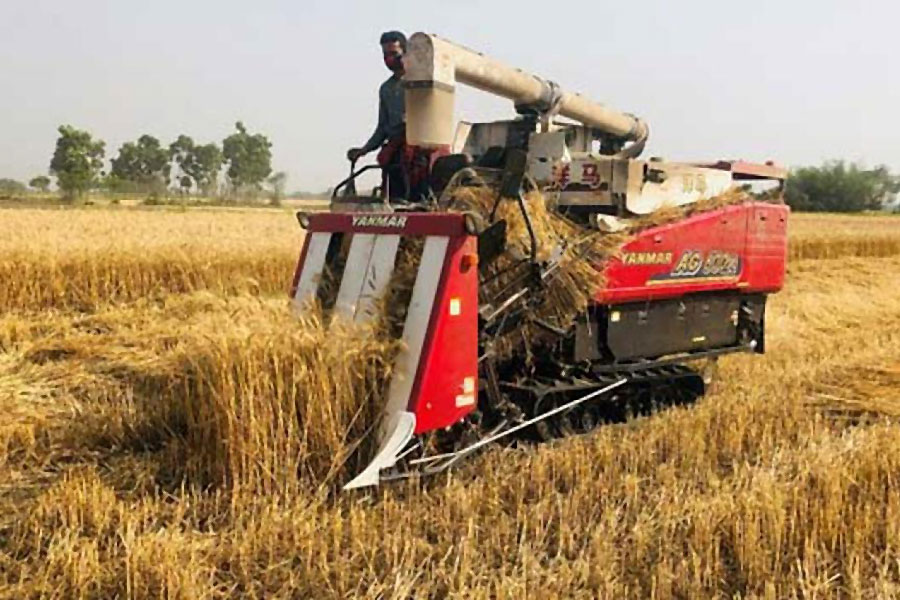
During seasonal harvesting peaks, daily wage rates for farm laborers spike dramatically, putting immense financial strain on smallholder farmers. Furthermore, climate change has heightened the threat of unpredictable weather events. Early flash floods in the Haor regions (wetlands) frequently submerge standing crops right before harvest, leading to devastating losses. In this race against time and labor shortages, harvester machines have emerged as a vital safeguard.
How Combine Harvesters Work: A Three-in-One Solution
The combine harvester gets its name because it performs three distinct agricultural operations simultaneously:
- Reaping (cutting the mature crop)
- Threshing (separating grain from straw)
- Cleaning (winnowing and removing debris from the paddy)
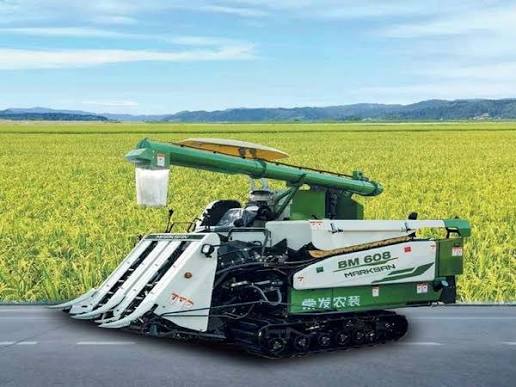
In Bangladesh, specialized compact crawler-type combine harvesters are particularly popular. Unlike massive Western farm machinery built for vast dry plains, these compact machines feature rubber track treads instead of wheels. This design enables them to navigate soft, muddy soils and small fragmented land plots characteristic of the Bengal delta without sinking.
| Key Metric | Manual Harvesting | Combine Harvester |
| Labor Requirement | 15–20 workers per acre | 1 machine operator |
| Duration | 1 to 2 days per acre | Under 1 hour per acre |
| Cost per Acre | BDT 10,000 – 12,000 | BDT 4,000 – 6,000 |
| Post-Harvest Loss | 8% – 12% | Less than 3% |
Economic Benefits and Labor Transformation
The economic impact of combine harvesters on rural households is profound. Traditional manual harvesting of one acre of paddy requires around 15 to 20 laborers working a full day. In stark contrast, a combine harvester can process the same acre in less than one hour at nearly half the total cost.
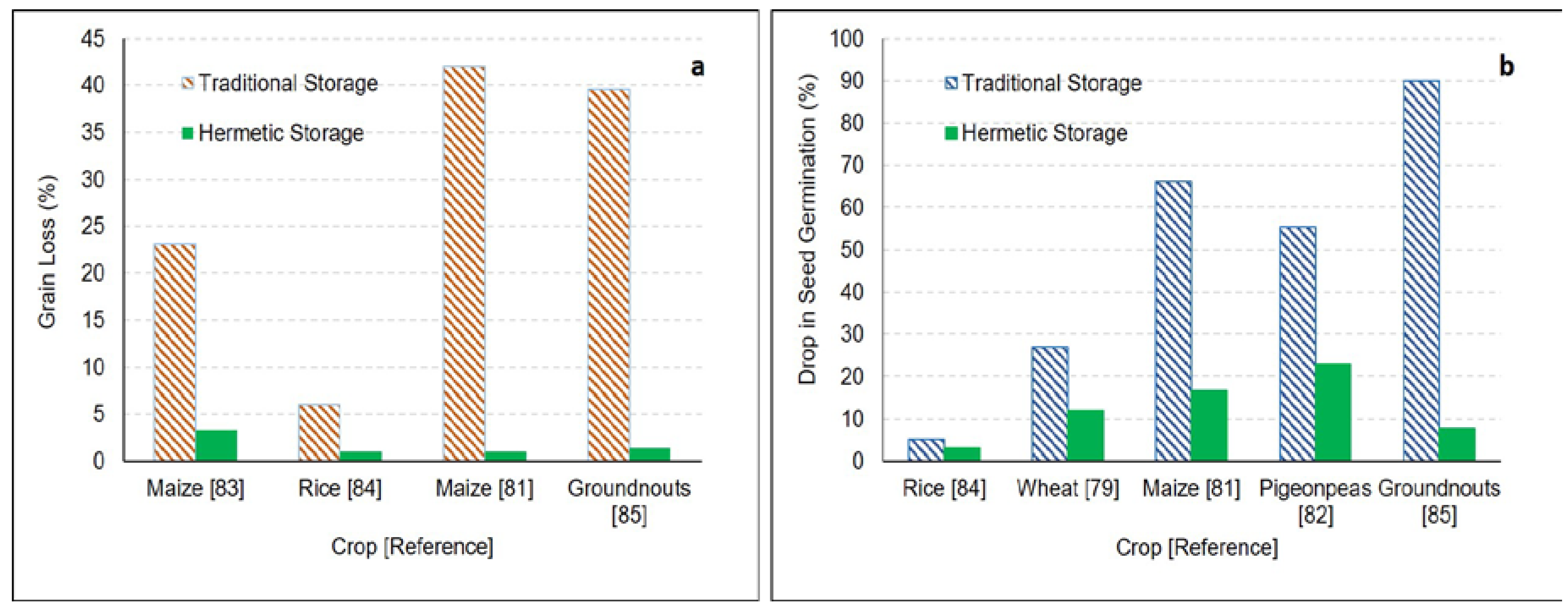
Additionally, grain losses during manual harvesting, transport, and threshing typically range from 8% to 12%. Combine harvesters reduce this loss to under 3%, saving hundreds of thousands of metric tons of grain nationally every single year.
Government Initiatives and Agricultural Subsidies
The rapid adoption of modern machinery in Bangladesh is heavily accelerated by strategic policy support. The Ministry of Agriculture has introduced generous subsidy schemes, covering between 50% to 70% of the total cost of farm machinery for rural farmers and custom-hiring groups. Special priority is given to flash-flood-prone Haor belts like Sunamganj, Sylhet, and Kishoreganj, where speedy harvesting is crucial to avoid complete crop ruin.
Challenges and the Road Ahead
While the benefits are clear, widespread adoption still faces hurdles:
- High Initial Capital Cost: Beyond the reach of individual smallholder farmers.
- Land Fragmentation: Small plot sizes make navigation between fields challenging.
- Service Infrastructure: Shortage of local mechanics and spare parts in remote villages.
To overcome these barriers, local agricultural tech startups and machinery operators are pioneering “Custom Hiring Services” (CHS)—an app-based or community-based rental model allowing smallholders to rent harvester services on an hourly or per-decimal basis without owning the machine outright.
Conclusion
The introduction of harvester machines marks a momentous shift toward smart, sustainable agriculture in Bangladesh. By dramatically cutting production costs, mitigating weather risks, and preserving grain quality, combine harvesters are securing the livelihoods of rural farming communities. As technology continues to integrate with traditional farmi